Azul vs Azul: Summer Pavilion: Which Should You Buy?
If you're shopping for one of these, you're almost certainly shopping for both. They're from the same designer, Michael Kiesling, they're both abstract tile-drafting games for 2-4 players, and they both look absolutely lovely on the table. The box art alone has caused plenty of people to stand in a game store holding one in each hand, and I get it. On paper they're siblings. In practice they have really different personalities.
Here's the difference that actually decides it. Original Azul is fast and a little cruel. Every tile you take leaves the rest for everyone else, and dumping garbage on your opponent is half the fun (or half the pain, depending on which side you're on). Summer Pavilion sands those sharp edges down. Wild tiles and a rule that lets you save up to four leftovers mean you're rarely eating a pile of negative points, and in exchange you get a slower, deeper placement puzzle. So the real question isn't which game is better. It's whether your table wants the mean one or the kind one.
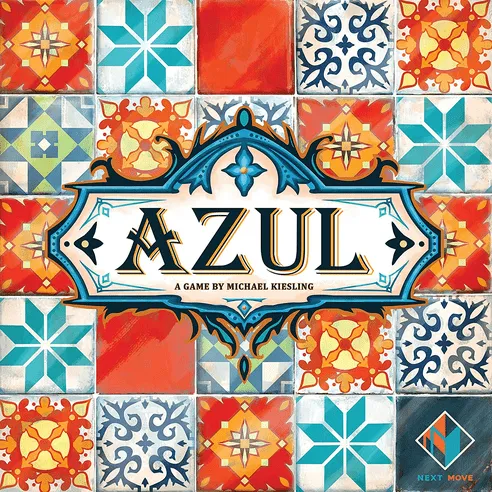
Azul
2017 · Michael Kiesling
The chunky tiles feel like candy, and the game under them is a clean little knife fight.
Affiliate link — we may earn a commission at no extra cost to you.
/pic4930887.jpg)
Azul: Summer Pavilion
2019 · Michael Kiesling
It's the deepest, kindest Azul yet, and if the original always felt a touch too mean for your table, this is the one to own.
Affiliate link — we may earn a commission at no extra cost to you.
Azul
- The resin tiles are so satisfying you'll fidget with them
- You can teach it in two minutes and the depth shows up right away
- It's fantastic at two players
- There's basically no theme, it's pure pattern and timing
- A runaway leader at four players can be hard to catch
Azul: Summer Pavilion
- Wild tiles and a save-up-to-four rule make it noticeably less punishing than the original
- Real puzzle depth in the placement phase, with cascading scoring that feels great when it clicks
- Gorgeous on the table, and easy to teach in a few minutes
- Plays slower than base Azul, often pushing past an hour with thinkers
- The central scoreboard is famously thin and flimsy
Azul and Azul: Summer Pavilion both sit in our Family list. See the full Family ranking to find where each one lands and what else is worth a spot on your shelf.
How they actually play
Azul is the one I hand to people who insist they don't really do board games, because by round two they've usually forgotten they said it. You draft sets of tiles from shared piles and lay them on your board for points, and the catch is that everything you take shapes what's left for everyone else. So half of every turn is deciding what you're willing to hand your opponents, and sometimes you'll grab tiles you don't even want just to keep them out of the wrong hands. It's shapes and timing, full stop, and it's over in about 40 minutes.
Summer Pavilion keeps the drafting bones but stretches them. You're collecting diamond-shaped tiles from factory displays, then spending them to fill a hexagonal star, and placing a tile in the three-slot literally costs you three tiles. Each round one color goes wild so you can patch holes when the supply dries up, and you keep up to four leftovers between rounds instead of losing everything. The result is a game where you can actually breathe and plan a few moves ahead, and the cascading scoring feels great when a placement clicks into place. It's less about denying your opponent and more about building your own beautiful thing.
Complexity and learning curve
Neither of these will scare anyone off. Azul teaches in about two minutes, and the depth shows up right away rather than hiding behind a rulebook. It's rated for ages 8 and up and genuinely earns that. Summer Pavilion is also easy to teach in a few minutes, but there's more to hold in your head once you're playing (wilds, the save-up-to-four rule, and placement costs that scale with the slot number). It sits a notch heavier, Medium instead of Light-Medium.
The bigger first-game difference is emotional, honestly. New Azul players sometimes get a sour taste when someone dumps tiles on them and they eat a pile of negative points before they've figured out the timing. Summer Pavilion's wilds and saving rule soften that considerably, so a first game there tends to feel friendlier, even if the turns take longer to think through. If your crew bruises easily, that matters more than any weight rating.
Replayability and table presence
Both games are stunners, though in different ways. Azul's resin tiles are so satisfying you'll fidget with them between turns, and the whole thing fits in that grab-it-by-the-front-door category of games you can play night after night. It's genuinely fantastic at two, where it turns slow and a little vicious in the best way. The knocks against it: there's basically no theme, and at four players a runaway leader can be hard to catch.
Summer Pavilion is gorgeous on the table too, and the placement puzzle has real depth that keeps rewarding repeat plays. Several reviewers now call it their favorite in the whole Azul line. But it plays slower than base Azul, often pushing past an hour with two careful thinkers, which surprises people expecting a breezy forty minutes. Some critics also grumble that it can feel like more Azul rather than a truly new game, and the central scoreboard is famously thin and flimsy. Players bring that last one up constantly, and they're not wrong.
If you only own one, I'd point most people at original Azul. It's faster, it's cheaper to teach, it's brilliant at two players, and that little streak of meanness is exactly what makes it so moreish. But if you've played Azul and someone at your table walked away stinging, Summer Pavilion is the fix, not the sequel. The wilds and the leftover-saving rule make it noticeably kinder without dumbing anything down, and the placement puzzle is the deepest in the line. Start with Azul if you're new. Buy Summer Pavilion if Azul's gut-punches were the only thing keeping you from loving it.
Azul is the sharp, speedy classic; Summer Pavilion is the same beautiful idea with the cruelty dialed down and the puzzle dialed up.